About
Engineer, toolmaker, dad.
ILM → Pixar → Epic Games → Meta Reality Labs


About
I'm a software engineer who has spent most of the last two and a half decades building production tools for film, games, and immersive computing. Most of that work has focused on physics based simulation systems. This is the kind of engineering that quietly supports and enables the work seen on screen.
Over the years I've worked at Industrial Light & Magic, Pixar, Epic Games, and Meta Reality Labs Research.
My work has spanned deformable simulation such as cloth, flesh, hair, skin, and muscle; rigid body dynamics for character physics and destruction; and fluid simulation. Much of it has involved turning research into practical tools that artists and technical directors can rely on in production.
The problems that interest me most tend to start with creative ambition. Someone says “wouldn't it be cool if...” or “we should be able to do that.” From there it becomes technical and non-technical artists, engineers, and researchers all pushing on the same problem from different directions, and it can be a lot of fun!
The way I tend to fit into those situations is by spanning the gap between research and production. I can speak both languages, but the only way for it to work is to have trust and understanding on both sides of that fence.
Researchers sometimes need the freedom to experiment and fail, and even to disappear into their work for a while. But they need to stay part of the full software development lifecycle, without being bogged down in details they don't need to care about. Otherwise they miss out on learning, and their relevance fades.
Production needs to feel understood in order to trust investing in new technology, and taking that leap. Artists need someone who can convey an intuition for how things work, that fits into their way of thinking. They need to be part of the development process, understand the shape of what's possible, and they need to know that someone's got their back.
I genuinely care about both sides of that divide. I love building enabling tools for artists, and I love pushing at the boundaries of what's possible with research. It's my understanding of the creative and research processes that helps me bridge the gap, and it's my care for the people involved in both that makes it work.
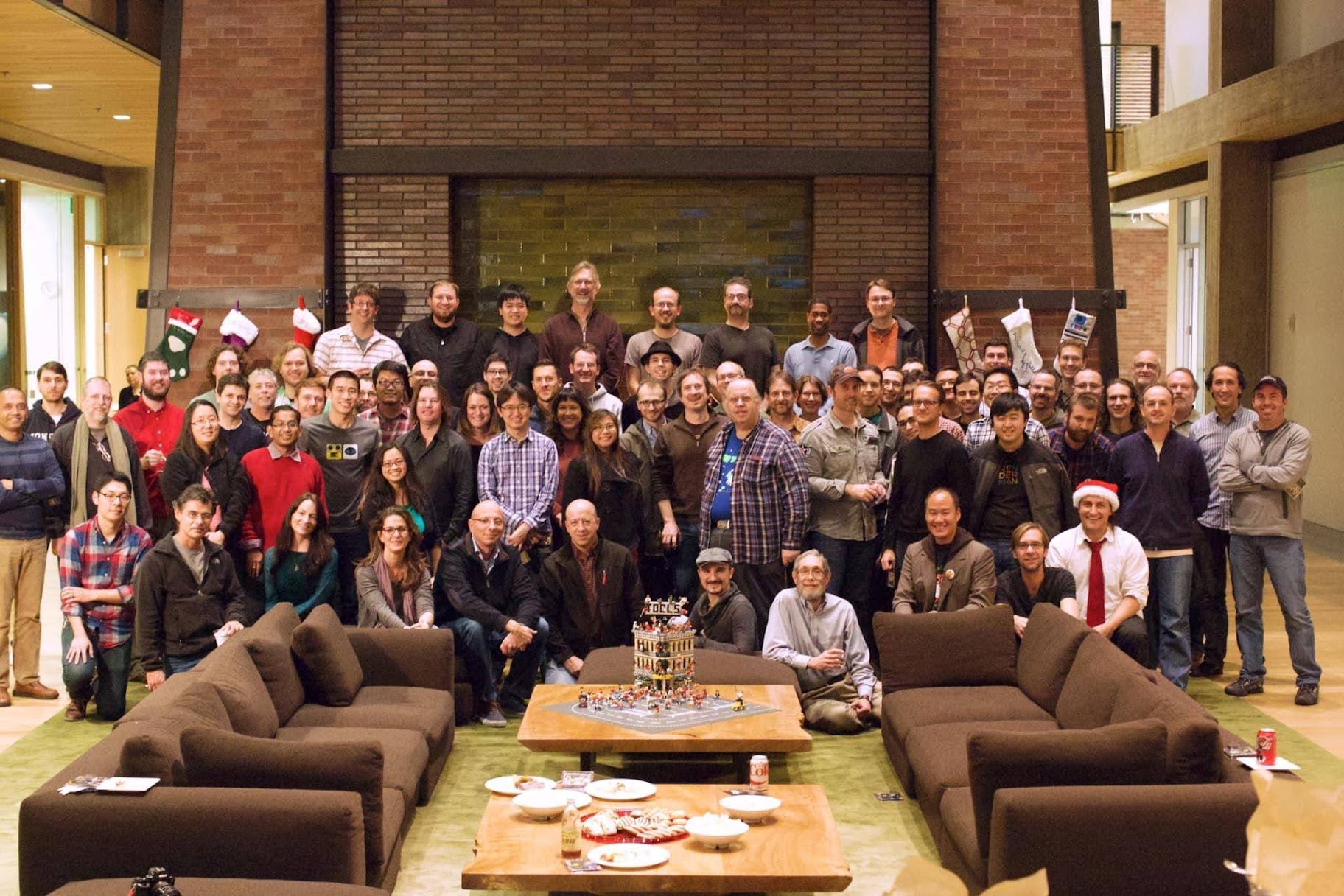
I like making tools for people who make things. I care about building systems that are powerful, understandable, and genuinely enjoyable to use. The only way I know how to do that is to care about the people I’m making them for, and the people I’m building them with. And there's nothing better than finding a like-minded bunch of nerds to build things with, and I've worked with some really great people.
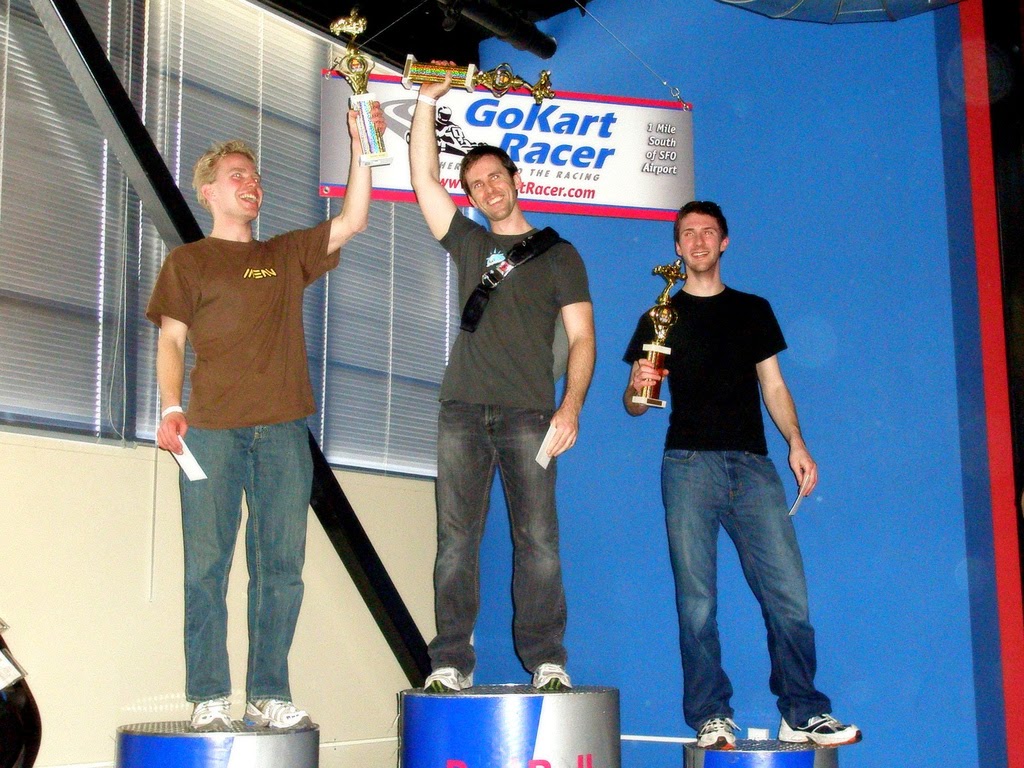
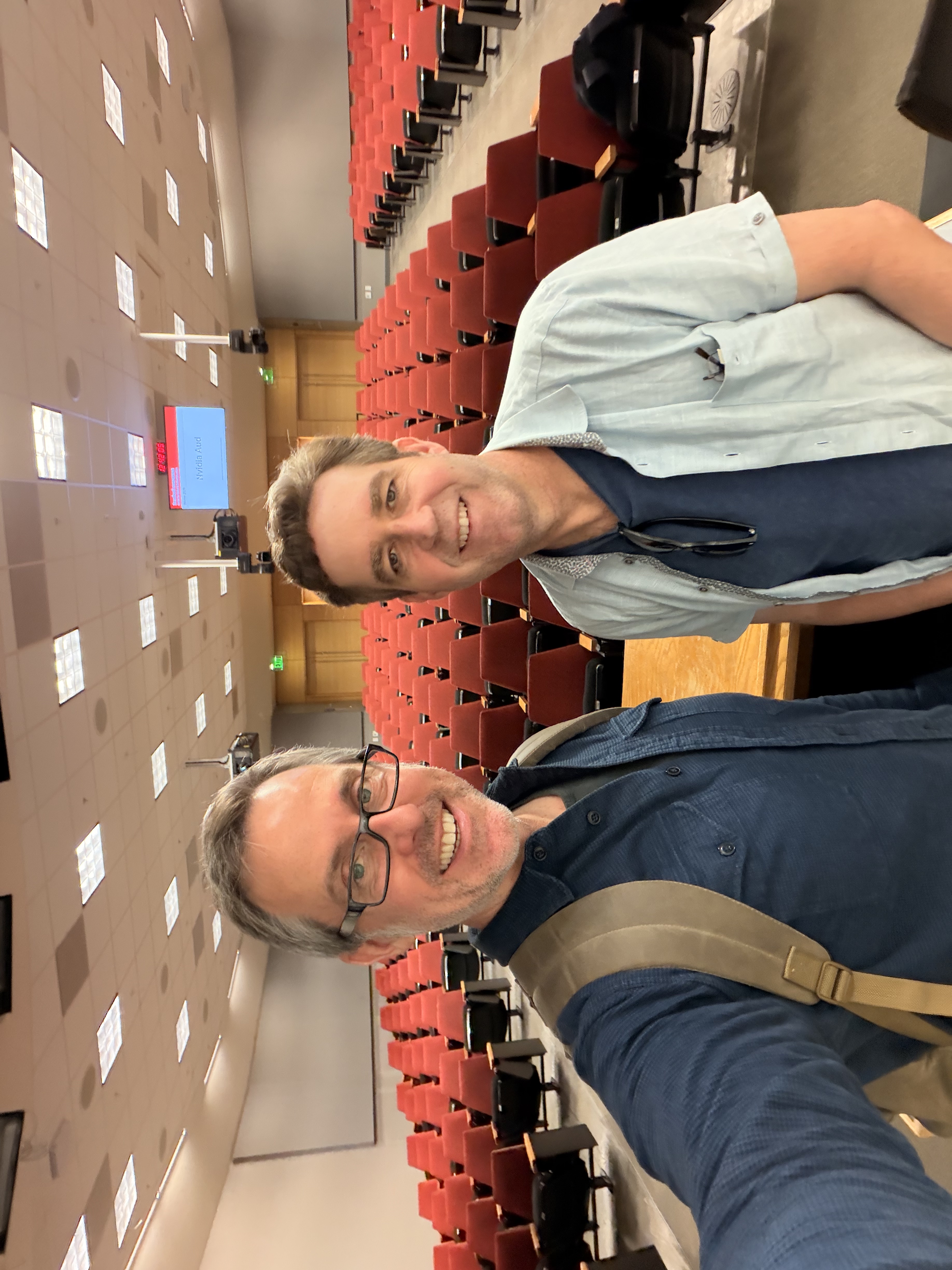
While my CV reads like I'm an engineer and I'm all about simulation, that's only a partial truth. The reality is that my heart really lies with artists. I am not an engineer for the sake of engineering. I'm an engineer out of necessity, because the things I tend to want to build require it.
I have this drive that compels me to make things, and they tend to fight their way out of me. I'll learn whatever I need to learn to make that happen, and that's kind of how I arrived in computer graphics. I think computer science and graphics is probably the most creative enterprise humanity has yet to come up with.
A longer path here
I put myself through college doing a bunch of jobs, but mostly working backstage as a stagehand.
I built sets, hung and focused lights, ran sound boards, and worked crew for productions ranging from musical theater to ballet, symphonies to concerts, and stand-up comedy to conventions. I even stage managed once, which was a real education on how to (and how not to) corral highly motivated people.
Theater shaped how I think about team building. It's a place where a motley crew of many specialists collaborate under pressure to make something ephemeral and (hopefully!) beautiful happen on cue. When everything works, the audience never notices the machinery behind it, and they get to be lost in the moment. When things go wrong, and they always will, it's the relationships between the people who make it happen that matters the most. The best crews I've worked with are the ones where everyone cares about each other, values each other, and lifts each other up. Even when they're wrong. Even when they make mistakes. Especially when they need help.
How I like to work
The environments where I've done my best work tend to share a few things:
- Technically ambitious problems
- Teams that value curiosity and collaboration
- A respect for craft and thoughtful engineering
Large software systems are rarely just technical challenges; they're social systems too. Clear thinking, good tools, and a culture of humility make an enormous difference in whether ambitious work succeeds.
I'm comfortable working autonomously, and in collaborative environments. I've done a lot of mentoring, and I find myself often gravitating towards leading teams. That's easiest to do when the todo list is clear, but I'm also experienced in exploring ambiguous problem spaces and charting a path forward.
Much of my career has involved helping research ideas survive contact with production reality: building architectures, tools, and infrastructure that allow complex techniques to scale to real teams and real deadlines.
Outside of work
Being a dad is the most important thing I've ever done. Much of my free time is spent with my kids, who are a constant reminder that curiosity and creativity are natural human instincts that we should try very hard not to lose.
I'm also a woodworker, I'm into photography and music, and I build guitar effects pedals (I once attempted to start a boutique guitar effects pedal company with a friend, but then figured out we couldn't survive doing it). I've played guitar since I was 15, and picked up the ukulele (which I finger pick like a spanish guitar) to be a corny dad.
If there's a theme that runs through most of my life, it's probably craft. I've been told I missed my calling as a product designer. I admire well-made things, whether they're pieces of software, pieces of furniture, photographs, or songs.
What I'm looking for
The places where I've done my best work have usually been environments where engineering and creativity come together. Teams building complex systems in service of something meaningful.
I'm especially interested in problems involving simulation, graphics, scientific computing, AI-assisted tools, and infrastructure for people who create things.
Selected production credits
Epic Games
Pixar Animation Studios
- Incredibles 2 (2018)
- Finding Dory (2016)
- The Good Dinosaur (2015)
- Brave (2012)
- Up (2009)
- WALL-E (2008)
Industrial Light & Magic
- Pirates of the Caribbean: Dead Man's Chest (2006)
- Star Wars: Episode III – Revenge of the Sith (2005)
- Harry Potter and the Prisoner of Azkaban (2004)
- Van Helsing (2004)
- Hulk (2003)
Full filmography available on IMDb.
- OpenUSD (Universal Scene Description) - listed contributor
- Presented to the Academy of Motion Picture Arts and Sciences Scientific & Technical Awards Committee (2022) for consideration in the 2023 Scientific & Technical Awards for work on PhysBAM-based flesh simulation systems developed at ILM and Pixar.
Patents
-
A method for stitching multiple deformable dynamic meshes together using a combination of geometric constraints and zero-length spring forces, enabling meshes of different levels of detail to be topologically connected at simulation time while maintaining stability.
-
Rest state retargeting: dynamically adjusts the rest pose of finite elements to match the current animated pose, so that the simulation contributes only ballistic secondary motion rather than fighting the primary animation. Particularly useful for fleshy characters where you want inertia without overriding the rig.
-
Core system for flesh and skin simulation in CGI and computer-aided animation.
-
FEM-based skin and flesh simulation combining rest state retargeting with biphasic material properties — a two-phase stiffness model where material resistance increases beyond a deformation threshold, mimicking how biological tissue stiffens under stretch.
-
A nested fluid simulation system where a coarse primary simulation drives a high-resolution secondary simulation within a sub-domain window. Fluid is sourced where the primary flow enters the window and removed where it exits, enabling detailed local fluid results without simulating the full volume at high resolution.